
Water Management

Supporting the SDGs


Goals and Performance Highlights
2025 Target
2025 Performance
Challenge and Opportunity
Climate change has intensified the volatility of water resources, resulting in more frequent occurrences of prolonged dry spells, drought conditions, and extreme rainfall or flash flood events.
These changes may affect the operations of energy and electrical infrastructure projects in several dimensions, including water management at project sites, drainage and stormwater management in infrastructure areas, as well as the potential risk of damage to equipment or structures caused by extreme weather events. Furthermore, project operations in certain areas may require the shared use of water resources with local communities and other sectors. Without appropriate management, this may lead to stakeholder concerns and potentially affect the acceptance of projects within the local area. At the same time, integrating water management into climate change risk management represents a significant opportunity to elevate the Company’s project development and management standards. By designing and operating projects in alignment with the water resource context of each location, such as implementing appropriate drainage and rainwater storage systems, promoting efficient water use, and continuously monitoring and assessing water-related risks, the Company can enhance its preparedness for climate variability, reduce environmental impacts on surrounding communities, and reinforce stakeholder confidence.
Management Approach and Value Creation
Water Management Approach
The Company prioritizes efficient and responsible water resource management by integrating sustainable water use (Water Efficiency) into its business operations in accordance with its Environmental and Climate Change Management Policy.
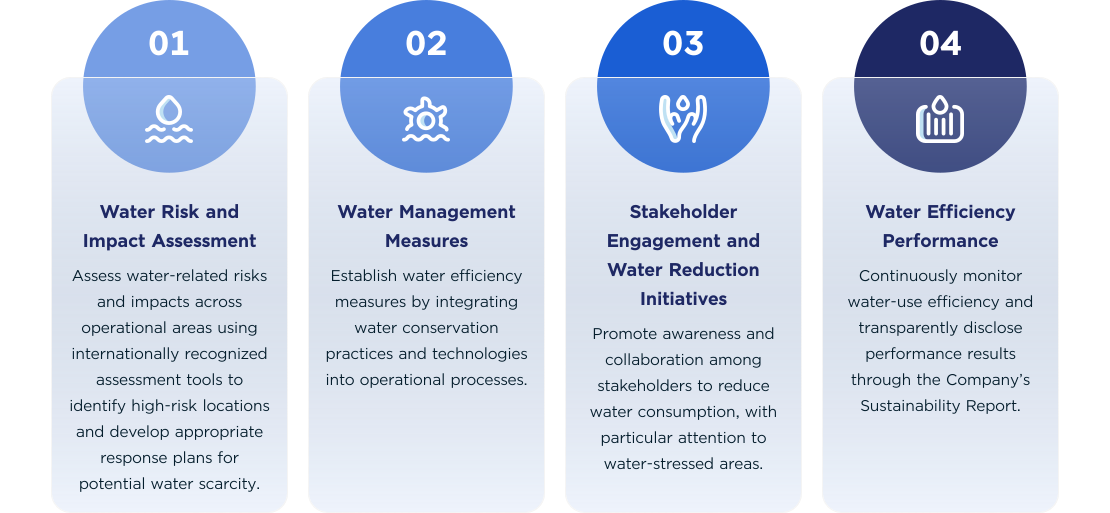
This approach focuses on optimizing resource utilization, minimizing environmental impacts, and ensuring no adverse effects on the surrounding communities' access to water sources, while supporting the conservation and protection of water resources in operational areas. The Company aims to efficiently manage water usage to minimize water consumption and impacts on water resources, alongside preparing for water resource volatility caused by climate change. By integrating water management into the organization's environmental and operational risk management processes, the Company supports sustainable development in alignment with the United Nations Sustainable Development Goals (SDG 6: Clean Water and Sanitation). To ensure systematic implementation, the Company has established a water management framework consisting of four key processes: Water Risk and Impact Assessment, Water Management Measures, Stakeholder Engagement and Water Reduction Initiatives, and Performance Monitoring and Reporting.
Water Risk and Impact Assessment
The Company prioritizes strategic water resource management to ensure operational efficiency and long-term sustainability. Recognizing the challenges posed by climate change, which may impact water security both in terms of quantity and availability, the Company conducts systematic water risk and impact assessments. These evaluations are designed to identify areas susceptible to water scarcity, with the results serving as a critical foundation for developing appropriate management measures and effective mitigation strategies.
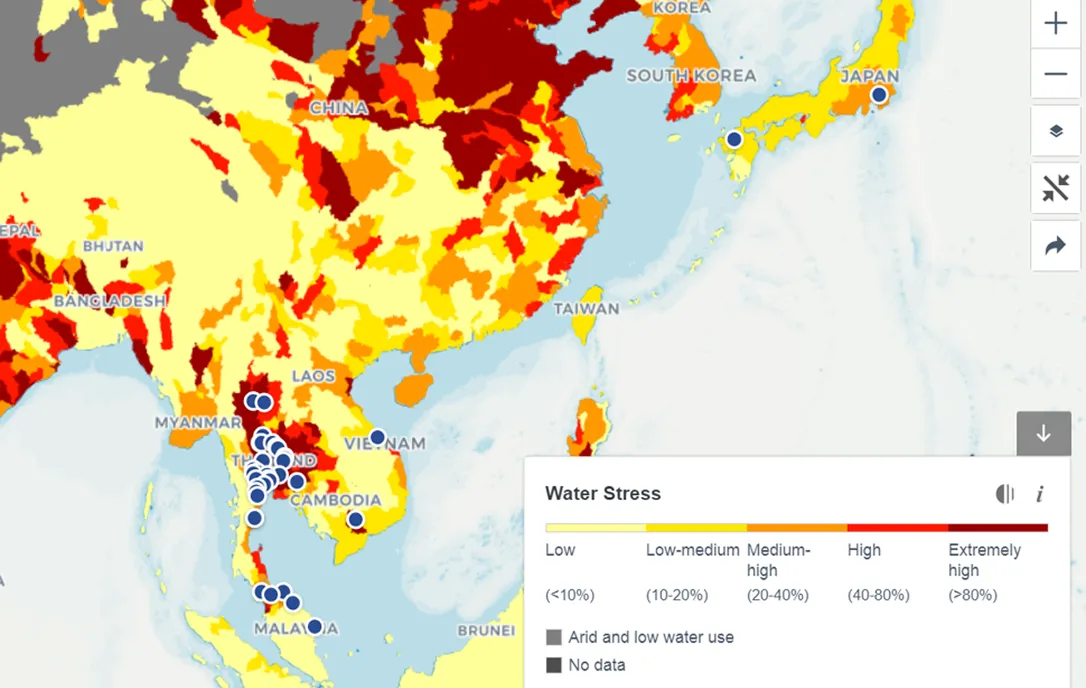
In 2025, the Company conducted a comprehensive water risk assessment using the AQUEDUCT Water Risk Atlas, an internationally recognized tool developed by the World Resources Institute (WRI). This assessment aimed to analyze water risk levels across its operational areas, considering critical factors such as baseline water stress, drought risks, and long-term water resource volatility. The evaluation covered the Company’s primary operational locations both domestically and internationally, including wind farms, solar farms, the corporate headquarters, and high-voltage equipment.
| Water Scarcity Risk Level | Total Operational Areas | Power Plant Operations | Headquarters and Manufacturing Facilities | |||
|---|---|---|---|---|---|---|
| Number of Sites | %(1) | Number of Sites | %(1) | Number of Sites | %(1) | |

Extremely High (>80%) |
21 | 44.68% | 20 | 42.55% | 1 | 2.13% |

High (40-80%) |
11 | 23.40% | 8 | 17.02% | 3 | 6.38% |

Medium – High (20-40%) |
12 | 25.53% | 12 | 25.53% | 0 | 0.00% |

Low – Medium (10-20%) |
2 | 4.26% | 2 | 4.26% | 0 | 0.00% |

Low (<10%) |
1 | 2.13% | 1 | 2.13% | 0 | 0.00% |
|
Water-Stressed Areas |
32 | 68.09% | 28 | 59.57% | 4 | 8.51% |
|
Total Operational Areas |
47 | 100% | ||||
Remark: (1) represents the proportion of sites located in water-stressed areas relative to the total number of operational sites within the reporting scope.
Proportion of operational sites located in Water-Stressed Areas
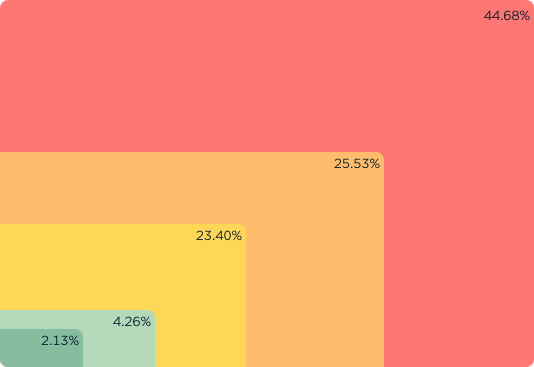
The results of this assessment are integrated into the Company’s water management framework and utilized to establish risk mitigation measures, specifically for operations within water-stressed areas. The assessment reveals that 68.09% of operational sites (32 out of 47 sites) are located in areas with high to extremely high water stress. Furthermore, the proportion of water withdrawal from these high-risk areas accounts for 52.12% of the total water consumption. These figures underscore the critical importance of implementing highly efficient water resource management in these vulnerable locations.
Recognizing that water resource volatility driven by climate change may impact long-term operational continuity and resource accessibility, the Company utilizes these risk assessment findings to prioritize operations. High-risk areas are addressed as a top priority through targeted management measures, including enhancing water-use efficiency, developing alternative water reserves, and reducing reliance on natural water sources. This proactive approach ensures business continuity while maintaining a sustainable balance of water resources within operational areas.
Water Management Measures
Based on the results of the water risk assessment, which indicate that certain operational areas of the Company are located in water-stressed areas, the Company has established systematic water management measures to prevent and mitigate potential impacts arising from water scarcity, as well as changes in water quality within operational areas. The results of the water risk assessment are used to determine water management approaches that are appropriate for the operational characteristics of each site, with priority given to areas identified as having higher water-related risks. These measures are also integrated into the Company’s environmental management system to ensure efficient water use, reduce water withdrawal from natural sources, and prevent potential impacts on surrounding ecosystems and local communities. To ensure that water management effectively addresses the risks associated with water stress, the Company has established water management measures aligned with the risks identified through the assessment, as outlined below.
| Water Stress-Related Risks | Water Management Measures |
|---|---|
| Water Quality Degradation / Non-compliance with Water Quality Standards |
|
| Water Scarcity due to Rising Demand |
|
To ensure that water management is executed efficiently and achieves sustainable outcomes, the Company prioritizes engaging personnel and stakeholders at all levels alongside the implementation of technical measures. The focus is on promoting responsible water usage behaviors and reducing water consumption across all operational processes. The Company implements engagement initiatives tailored to the operational characteristics of each site as follows:
- Corporate Offices: Cultivating a Conservation Culture Promote water efficiency based on the 3Rs principle (Reduce, Reuse, Recycle) through internal communication activities to raise awareness and instill a mindset of responsible water resource utilization, embedding it as a sustainable part of the corporate culture.
- Manufacturing Facilities: Enhancing Personnel Engagement Encourage the participation of employees and on-site contractors in water conservation through environmental activities. Promote responsible operational practices to collaboratively and tangibly reduce water resource loss across all production processes.
- Power Plants: Stakeholder Collaboration and Local Engagement Foster participation among employees, contractors, and surrounding communities in efficient water management, particularly in water-stressed areas, to build resource security collaboratively and sustainably with all stakeholder sectors.
Water Efficiency Performance


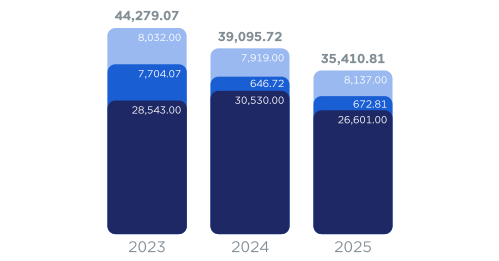
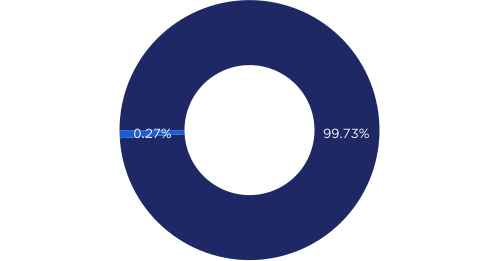
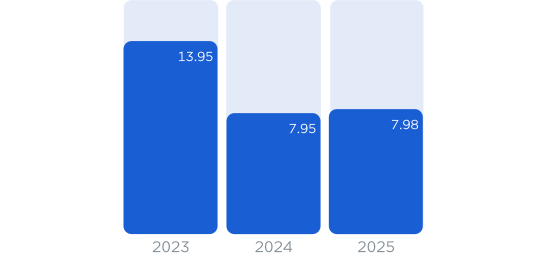
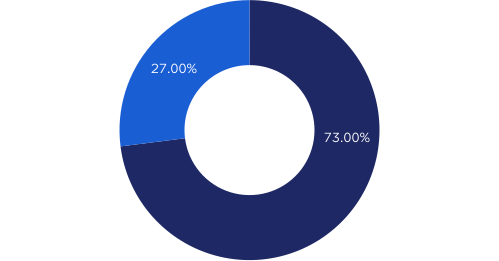
In 2025, the Company’s total water consumption amounted to 35,410.81 m³. This consisted of 25,604.00 m³ of groundwater (72.50%) and 9,710.81 m³ of municipal water (27.50%) of the total external water withdrawal. Total external water withdrawal decreased by 9.45% compared with the 2024 baseline, exceeding the Company’s reduction target of 5.00%. In addition, water recycling within the manufacturing facilities totaled 96 m³, accounting for 0.27% of total water consumption. While water consumption per employee increased slightly by 0.36%, the Company remains committed to strengthening water conservation measures and raising awareness among employees. These efforts aim to improve water use efficiency and minimize impacts on the environment.
Total Water Consumption (m³)
Proportion of Recycled Water Use
Water Intensity per Employee (m³/person)
Total Water Withdrawal by Source (m³)
Stakeholders Directly Impacted

Employees

Customers

Shareholders and Investors

Public Sector

Communities and Society

Our Projects