

Environmental Responsibility and Biodiversity

Supporting the SDGs


Goals and Performance Highlights
2025 Target
2025 Performance

2025 Target
2025 Performance
2025 Target
2025 Performance
2025 Target
2025 Performance
Challenge and Opportunity
The development of clean energy and electrical infrastructure projects is closely associated with land use and natural resources, which may affect ecosystems and biodiversity in project areas.
During the project development and construction phases, activities such as land-use change and potential disturbance to natural habitats may occur. Without appropriate planning and management, these activities could lead to impacts on local ecosystems, concerns from communities or relevant stakeholders, as well as regulatory constraints and project approval challenges. Such factors may affect project development timelines and the continuity of the Company’s investment plans. At the same time, systematically managing environmental and biodiversity impacts presents an opportunity to strengthen project development processes in alignment with local environmental conditions and recognized environmental practices. The Company can integrate biodiversity risk assessment and ecosystem management approaches from the project site selection stage, incorporate design measures to minimize impacts on natural habitats, establish mitigation and prevention measures, and conduct environmental monitoring and restoration in operational areas. These practices help strengthen stakeholder confidence, support the smooth implementation of projects, and enhance the Company’s capability to develop clean energy and infrastructure projects while contributing to the long-term conservation of natural resources.
Management Approach and Value Creation
Environment Management Approach
The Company systematically integrates environmental considerations into its corporate strategy while increasing the proportion of clean energy generation in order to reduce impacts on ecosystems and address climate change. The Environmental and Climate Change Management Policy is established and reviewed annually to ensure alignment with the Company’s business context, risk landscape, and stakeholder expectations.
The Company adopts the ISO 14001:2015 Environmental Management System as the framework for environmental governance. The system is implemented across high-voltage electrical equipment manufacturing facilities, wind power plants, and solar power plants, and is also applied to engineering and turnkey project activities. This framework supports the control, prevention, and mitigation of environmental impacts while improving resource efficiency. In addition, the Company promotes the participation of employees and stakeholders in continuously improving environmental management processes. Preventive measures are implemented to minimize potential environmental impacts, accompanied by systematic monitoring and performance evaluation. These practices support the Company’s environmental sustainability objectives and contribute to stable long-term business growth.
| Environmental Issue | Mitigation & Improvement Measures |
|---|---|
| Air Quality |

|
 
|
|

|
|
| Noise Level |
|
|
|
|
|
| Greenhouse Gas Emissions |

|
| Water Usage |
|
|
|
|
|
| Drainage |
|
| Energy Consumption |
|
| Non-Hazardous Production Waste |
|
| Hazardous Production Waste |
|
| Biodiversity |
|
To ensure effective environmental and biodiversity management, the Company has established preventive and mitigation measures to address potential impacts on ecosystems throughout all stages of project implementation, as summarized in the table above. In addition, biodiversity considerations are systematically integrated into the Company’s risk management and project development processes. Key implementation approaches include the following:
Biodiversity Commitment
The Company recognizes the importance of conducting its business while maintaining the integrity of ecosystems. In line with the Environmental and Climate Change Management Policy, the Company is committed to supporting the protection of ecosystems and biodiversity while systematically controlling, preventing, and mitigating environmental impacts arising from its operations. Environmental and biodiversity considerations are integrated into project development from the early stages in order to avoid and minimize potential impacts on natural habitats and legally protected areas. In addition, the Company promotes natural resource restoration and efficient resource management to help maintain ecological balance and support long-term positive environmental outcomes.
Biodiversity Risk Assessment
Corporate Biodiversity Risk Assessment
The Company conducts biodiversity risk assessments across all operational areas, including existing operations and projects under development. These assessments reference internationally recognized definitions of protected areas, as established by the International Union for Conservation of Nature (IUCN), and utilize the WWF Biodiversity Risk Filter (BRF) to systematically identify and analyze location-specific biodiversity risk factors.
Assessment Scope and Key Risk Indicators
The Company focuses on analyzing biodiversity risks across two key dimensions in order to establish management approaches that are appropriate to the ecological context of each operational area:
- Physical Risk: Assessment of surrounding ecosystem conditions and natural environmental characteristics that may influence the long-term sustainability of projects.
- Reputational Risk: Assessment of the proximity of project locations to protected areas and Key Biodiversity Areas (KBAs) that may present biodiversity-related reputational risks.
In 2025, the Company operated a total of 40 project sites, including the headquarters, high-voltage electrical equipment manufacturing facilities, wind power plants, and solar power plants (excluding rooftop solar installations that do not involve significant land use). All projects underwent biodiversity risk assessment.
Number of Sites by Risk Type
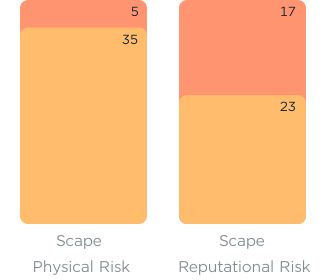
Number of Sites by Risk Type
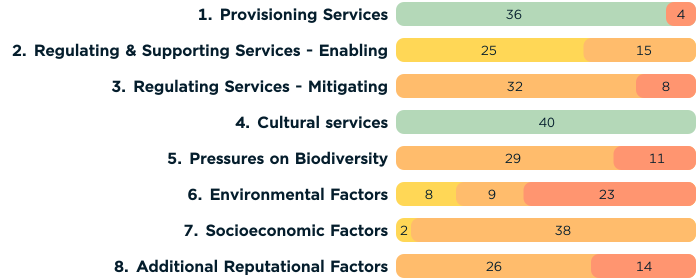
WWF Biodiversity Risk Filter Levels

Very low (1.0-1.8)

Low (1.8-2.6)

Medium (2.6-3.4)

High (3.4-4.2)

Very High (4.2-5.0)
Spatial analysis using geographic data indicated that none of the projects are located within protected areas as defined by the International Union for Conservation of Nature (IUCN). Overall, most sites were assessed as having low to moderate biodiversity risk, and no locations were identified as having very high risk. However, when analyzed by risk dimension, 5 projects (12.50%) were identified as having high physical risk. In terms of reputational risk, 42.50% of projects were classified as requiring monitoring due to their proximity to environmentally sensitive areas. The assessment results are used to prioritize sites that require enhanced biodiversity management measures and to support the design of impact mitigation measures in accordance with the Mitigation Hierarchy, including avoidance, minimization, and restoration or offsetting.
Biodiversity Risk Assessment for New Projects
Environmental and Social Impact Assessments (ESIA) are conducted for projects under development to ensure that business operations are carried out responsibly with respect to ecosystems and biodiversity. In 2025, detailed biodiversity assessments were conducted as part of the ESIA process for several solar power projects, including the NRTW3 Project in Narathiwat (60.8 MW), the PTN Project in Pattani (78.6 MW), and the STN Project in Satun (91.3 MW), all of which are scheduled to commence commercial operations from 2026 onwards. The assessments utilized the Integrated Biodiversity Assessment Tool (IBAT) together with field surveys conducted by independent third-party experts to evaluate biodiversity risks in accordance with IFC Performance Standard 6 (PS6) and IFC Guidance Note 6. Key findings from the biodiversity assessments include:
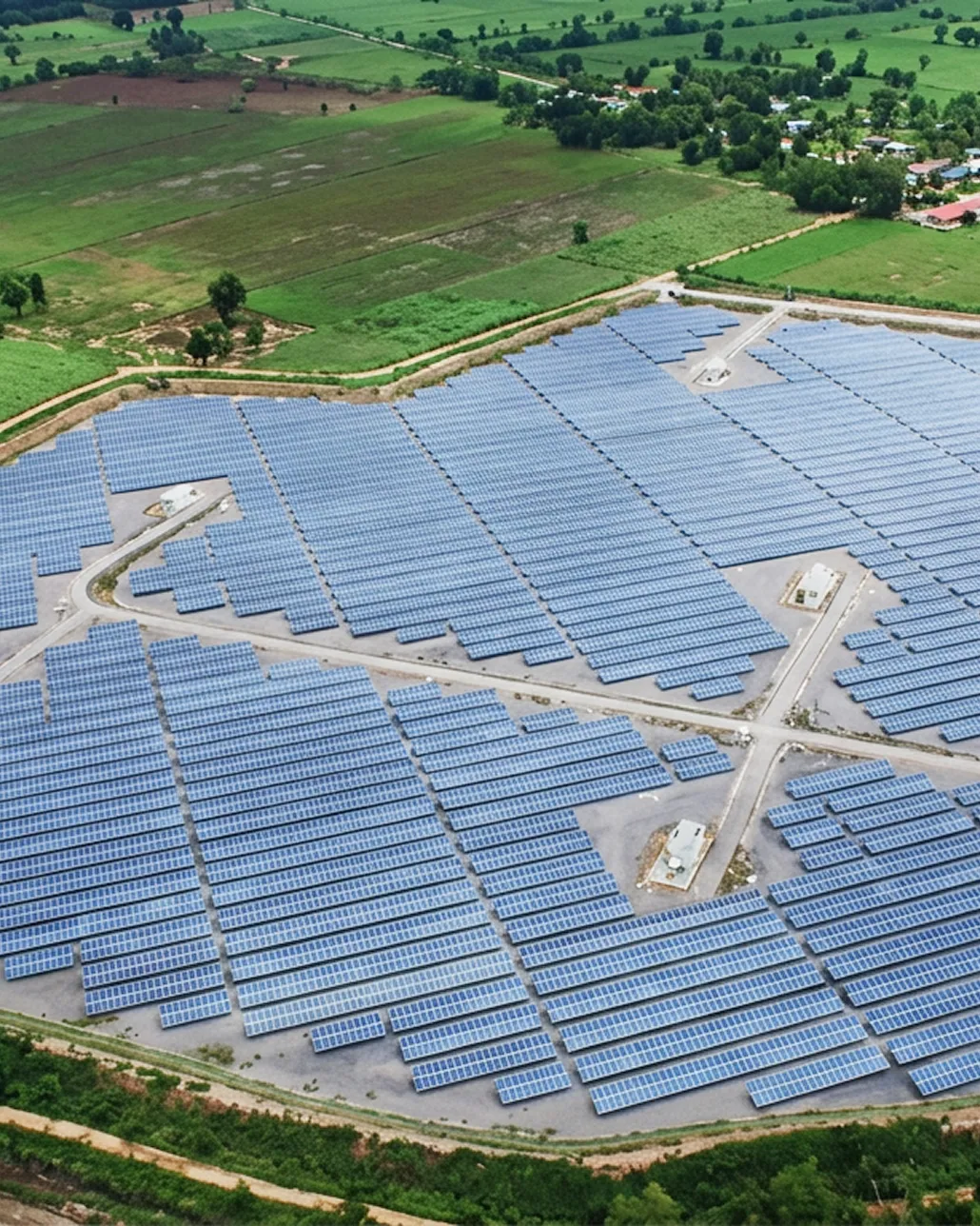
- Habitat Assessment: Field surveys indicate that most project areas are classified as modified habitats, primarily consisting of agricultural land and abandoned rice fields, which generally exhibit low ecological sensitivity.
- Species of Conservation Concern: Biodiversity surveys conducted within the project areas and surrounding environments identified the following species diversity:
| Species Diversity | NRTW3 Project | PTN Project | STN Project |
|---|---|---|---|
| Species Diversity | 357 Species | 334 Species | 308 Species |
| Flora | 208 Species | 199 Species | 186 Species |
| Fauna | 149 Species | 135 Species | 122 Species |
To ensure that biodiversity risks identified through these assessments are effectively managed, the findings are incorporated into the Company’s biodiversity impact management process. The Company applies the Mitigation Hierarchy, including avoidance, minimization, restoration, and offsetting, to manage potential impacts, support positive outcomes for nature, and maintain ecological balance in project areas.
Biodiversity Impact Mitigation and Engagement
Biodiversity risk assessment results are used to prioritize areas that require proactive biodiversity management measures. Particular attention is given to areas identified as requiring monitoring, where enhanced management measures and monitoring plans are established for both existing operations and new project developments. By applying the Mitigation Hierarchy alongside systematic environmental governance, the Company aims to mitigate potential impacts and maintain the long-term integrity of ecosystems.

| Mitigation Actions | |
|---|---|

Avoid |
|

Minimize |
|

Restore and Offset |
|
Future Action Plan
The Company plans to further strengthen biodiversity management in line with international practices by developing Biodiversity Action Plans (BAPs) for ecologically significant areas in the future. The approach begins with identifying operational areas with ecological sensitivity and vulnerable species of flora and fauna in order to design site-specific conservation measures. These initiatives aim to contribute to nature-positive outcomes and support the goal of no net loss of biodiversity. The Company will also promote collaboration with biodiversity experts and local communities to support natural resource conservation alongside the sustainable growth of clean energy development.
Stakeholders Directly Impacted

Employees

Customers

Shareholders and Investors

Public Sector

Communities and Society

